Food and drink stains on carpet
A fresh splash of coffee or juice looks light on the surface, but the dried mark usually turns darker than the spill seemed at first. Sugar draws toward the outer border as liquid evaporates, leaving a stiff edge around a paler center.
How dried sugar changes the mark
A wet splash spreads outward until the liquid stops moving, but the edges dry first. As moisture leaves the perimeter, sugar concentrates along that outside line, forming a dark crust while the center stays relatively soft.
Touching the dry spot tells you where the heaviest buildup settled. The cloth picks up the lighter interior quickly, but the hardened border often needs extra contact with the damp fabric to transfer its darker tint.
Dark liquids and setting dyes
Wine and black coffee carry natural color that fastens to dry fibers as hours pass. A mark that sat unnoticed over a weekend has had time to dry down completely, turning a faded tan spot into a sharp brown patch.
Old food marks usually show where previous attempts diluted the center without lifting the edge. The outer perimeter holds the dried pigments that were pushed aside during earlier spot checks.
Dairy and thickening liquids
Spills with fats or milk dry with a dull, matte crust rather than a glossy ring. Once the water dries out of a dairy spill, the mark turns chalky and resists being picked up until it is thoroughly dampened again.
Sauces that contain both fat and cooked sugars set into thick surface caps. The cloth will show clear sauce oils before the underlying food color finally begins to transfer over.
What this note covers
Chocolate
Cocoa fats dry into a brittle brown cap over the pile, meaning the solid surface buildup must soften against the wet cloth before the darker color transfers.
Coffee
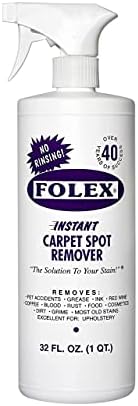
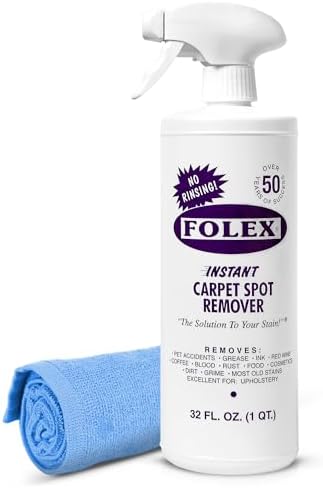
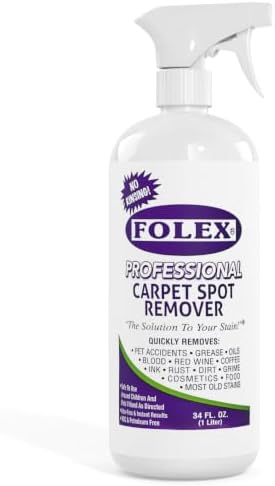
Coffee is named on our bottle because tannins settle quickly into pale fibers, turning from a warm tan splash to a sharp, dark perimeter as the puddle dries.
Food spills
Food spills are named on our bottle and combine fats with cooked seasonings, leaving rings that dry stiff and show several distinct shades of sauce across the mark.
Milk
Dairy turns opaque and chalky as the liquid evaporates, leaving a pale, stiff patch that looks nearly invisible while wet but turns yellowed once fully dry.
Red wine
Red wine is named on our bottle, leaving a vivid purple ring that oxidizes into a stubborn gray-brown boundary line if allowed to dry over several days.
Soda
Clear or caramel sodas dry into hard, sticky rings where syrup gathers along the outer rim, darkening as dust settles onto the tacky edge over time.